Curious about CBD but not sure where to start? You’re not alone. Over the past few years, cannabidiol, better known as CBD, has gone from a niche wellness ingredient to a mainstream product found in oils, gummies, skincare, beverages, pet products, and even sports recovery formulas. As the industry continues to mature in 2026, consumers have access to more products than ever before, but they also face more questions.
What exactly is CBD? How does it work inside the body? Is it the same as cannabis? Will it make you feel high? And with so many brands claiming to offer the “best CBD,” how do you know which products are actually worth considering?
This beginner-friendly guide answers those questions using the latest scientific understanding available as of June 2026. You’ll learn how CBD interacts with the body’s natural systems, the different types of CBD products available, the differences between CBD and THC, and what to look for when choosing a high-quality product. Whether you’re simply researching CBD or considering trying it for the first time, this guide is designed to help you make informed decisions based on evidence rather than marketing hype.
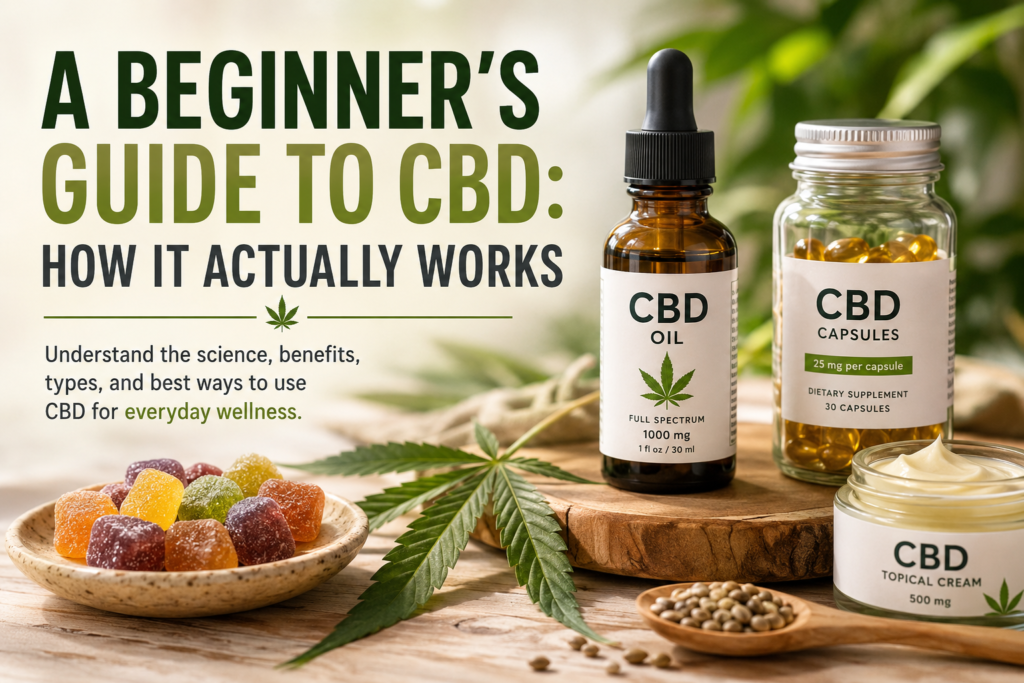
Image Suggestion: A selection of modern CBD products including oil, gummies, capsules, topical cream, and hemp leaves arranged on a clean wooden surface.
Recommended Alt Text: Various CBD products including tinctures, gummies, capsules, and topical cream for beginners.
Table of Contents
- What Is CBD?
- What Does CBD Stand For?
- Where Does CBD Come From?
- How CBD Works in the Body
- Understanding the Endocannabinoid System
- CBD vs THC: What’s the Difference?
- The Three Main Types of CBD
What Is CBD?
CBD, short for cannabidiol, is one of more than one hundred naturally occurring compounds known as cannabinoids that are found in the Cannabis sativa plant. Unlike tetrahydrocannabinol (THC), CBD does not produce the intoxicating effects commonly associated with cannabis. Instead, it has gained attention because of how it interacts with the body’s own biological systems.
Today, CBD is commonly extracted from industrial hemp, a variety of cannabis that contains only trace amounts of THC. In many countries, hemp-derived CBD products are legally available when they meet local THC limits and regulatory requirements.
CBD is now found in a wide variety of products, including:
- CBD oils and tinctures
- Softgel capsules
- Gummies and other edibles
- Beverages
- Topical creams and balms
- Skincare products
- Pet wellness products
Although CBD has become increasingly popular in wellness routines, it is important to remember that not all products are the same. Product quality, ingredient transparency, manufacturing standards, and third-party laboratory testing can vary significantly between brands.
What Does CBD Stand For?
CBD stands for cannabidiol. It is one of the primary naturally occurring cannabinoids found in hemp and cannabis plants.
Cannabinoids are plant compounds that can interact with receptors and signalling systems throughout the human body. Scientists have identified well over one hundred cannabinoids, including:
- CBD (Cannabidiol)
- THC (Tetrahydrocannabinol)
- CBG (Cannabigerol)
- CBN (Cannabinol)
- CBC (Cannabichromene)
Among these, CBD and THC remain the two most widely researched cannabinoids. While they come from the same plant family, they behave very differently inside the body.
Where Does CBD Come From?
Most commercially available CBD products begin with hemp cultivation. Hemp is grown specifically to produce high concentrations of CBD while naturally remaining very low in THC.
Once harvested, manufacturers extract CBD from the plant using methods such as:
- Supercritical CO₂ extraction
- Ethanol extraction
- Food-grade solvent extraction
Among these methods, supercritical CO₂ extraction is widely regarded as one of the cleanest and most precise techniques because it can efficiently isolate cannabinoids while preserving many of the plant’s naturally occurring compounds.
After extraction, manufacturers refine the extract into different formulations depending on whether they are producing full-spectrum, broad-spectrum, or CBD isolate products.
Image Suggestion: Illustration showing hemp cultivation, extraction, purification, laboratory testing, and finished CBD products.
Recommended Alt Text: The journey of CBD from hemp cultivation to finished consumer products.
How CBD Works in the Body
One of the biggest misconceptions about CBD is that it works by directly binding to cannabinoid receptors in the same way THC does. Research now suggests the process is considerably more complex.
Instead of strongly attaching to cannabinoid receptors, CBD appears to influence several biological pathways simultaneously. Scientists believe it may affect signalling molecules, neurotransmitters, enzymes, receptors, and inflammatory processes throughout the body.
Research continues to explore how CBD interacts with:
- The endocannabinoid system (ECS)
- Serotonin receptors
- TRPV1 receptors involved in pain signalling
- Adenosine signalling pathways
- Various enzymes responsible for breaking down naturally occurring endocannabinoids
Because of these wide-ranging interactions, researchers continue studying CBD for potential applications across multiple areas of health and wellness. However, many proposed benefits still require larger, high-quality clinical trials before firm conclusions can be made.
Understanding the Endocannabinoid System (ECS)
To understand CBD, it’s helpful to first understand the body’s endocannabinoid system, often called the ECS.
The ECS is a complex cell-signalling network found throughout the human body. Scientists believe it plays a role in helping regulate numerous physiological processes that contribute to overall balance, sometimes referred to as homeostasis.
Researchers have identified three primary components of the ECS.
1. Endocannabinoids
These are naturally produced compounds made by your own body. Two of the best-known endocannabinoids are:
- Anandamide (AEA)
- 2-Arachidonoylglycerol (2-AG)
Your body produces these compounds as needed rather than storing them.
2. Cannabinoid Receptors
These receptors receive signals from endocannabinoids.
- CB1 receptors are found primarily within the brain and central nervous system.
- CB2 receptors are more commonly associated with immune cells and tissues throughout the body.
Unlike THC, CBD has relatively little direct activity at either receptor, which helps explain why it does not produce intoxicating effects.
3. Enzymes
Once endocannabinoids have completed their signalling function, enzymes break them down.
Some evidence suggests CBD may influence enzymes involved in this process, particularly those responsible for breaking down anandamide. This remains an active area of scientific research.
Why the ECS Matters
The endocannabinoid system has been linked to numerous biological functions, including:
- Sleep regulation
- Mood
- Stress response
- Memory
- Appetite
- Immune function
- Pain perception
- Inflammatory responses
Researchers continue investigating exactly how CBD influences these systems, but current evidence suggests its effects are indirect rather than acting like a simple on/off switch.
Image Suggestion: Simplified diagram of the endocannabinoid system showing CB1 receptors, CB2 receptors, endocannabinoids, and where CBD may influence signalling.
Recommended Alt Text: Diagram explaining how the endocannabinoid system interacts with CBD.
CBD vs THC: What’s the Difference?
Because CBD and THC both come from cannabis plants, many people assume they have the same effects. In reality, they differ significantly in how they interact with the body.
| Feature | CBD | THC |
|---|---|---|
| Psychoactive | No intoxicating effect | Produces a psychoactive high |
| Main Source | Usually hemp | Marijuana and some cannabis varieties |
| Interaction with CB1 Receptors | Minimal direct binding | Strong binding |
| Typical Wellness Use | General wellness support | Medical and recreational use depending on local laws |
| Legal Status | Varies by country | More heavily regulated |
Even though hemp-derived CBD products contain very little THC in many markets, consumers should always review product labels and laboratory test results before purchasing, particularly if drug testing is a concern.
The Three Main Types of CBD
Not all CBD products contain the same ingredients. Understanding the different extract types can help you choose the option that best matches your preferences.
Full-Spectrum CBD
Full-spectrum CBD contains cannabidiol along with many of the hemp plant’s naturally occurring compounds, including minor cannabinoids, terpenes, flavonoids, and trace amounts of THC that remain within legal limits where permitted.
Some researchers continue studying whether these compounds work together through what is commonly called the “entourage effect,” although more evidence is still needed to fully understand this interaction.
Broad-Spectrum CBD
Broad-spectrum CBD contains multiple cannabinoids and beneficial plant compounds while typically removing detectable THC during processing.
This option is often chosen by people who want additional hemp compounds but prefer to avoid THC where possible.
CBD Isolate
CBD isolate is the most refined form of cannabidiol and generally contains only purified CBD with other cannabinoids and plant compounds removed.
People looking for a product that contains cannabidiol alone often choose CBD isolate.
| CBD Type | Contains Other Cannabinoids | Contains THC | Best For |
|---|---|---|---|
| Full-Spectrum | Yes | Trace legal amounts | Users wanting the complete hemp profile |
| Broad-Spectrum | Yes | Typically removed | Those seeking multiple cannabinoids without THC where possible |
| CBD Isolate | No | No | Users wanting pure cannabidiol only |
Each type has advantages depending on your goals, preferences, and local regulations. In the next section, we’ll explore why people commonly use CBD, what current research says about its potential benefits, and what beginners should know before choosing a product.
Why Do People Use CBD?
CBD has become a popular wellness ingredient among people with a wide range of lifestyles and goals. Some incorporate it into their daily routine for general well-being, while others use specific products to support recovery after exercise, promote relaxation, or complement an existing self-care routine.
It’s important to understand that people can respond differently to CBD. Factors such as body chemistry, dosage, product quality, method of use, and consistency may all influence an individual’s experience.
While research into CBD continues to grow, scientists are still working to better understand its full range of effects. Many of the reasons people choose CBD are supported by early or moderate evidence, while other uses remain largely based on personal experiences and require further clinical research.
Some of the most common reasons people try CBD include:
- Supporting everyday wellness
- Managing occasional stress
- Promoting relaxation after busy days
- Supporting healthy sleep routines
- Exercise recovery
- Maintaining joint and muscle comfort after physical activity
- Skincare and topical wellness
Image Suggestion: A person enjoying a relaxing evening with a cup of tea and a CBD tincture on a nearby table.
Recommended Alt Text: Person incorporating CBD oil into a calming evening wellness routine.
What Does Current Research Say About CBD?
Interest in CBD has expanded significantly over the past decade, leading to thousands of published studies exploring how cannabinoids interact with the human body. However, researchers consistently note that many areas require additional high-quality clinical trials before firm conclusions can be reached.
Rather than viewing CBD as a cure or guaranteed solution, most healthcare professionals recommend approaching it as one part of a broader wellness strategy while staying informed about emerging research.
Stress and Relaxation
Stress management remains one of the most common reasons people purchase CBD products. Some early clinical studies suggest CBD may influence serotonin signalling and other pathways associated with emotional regulation.
While these findings are encouraging, larger long-term studies are still needed to determine which individuals may benefit most and under what circumstances.
Sleep Quality
Many people report taking CBD before bedtime as part of their evening routine.
Current research suggests CBD may indirectly support better sleep for some individuals by promoting relaxation or helping reduce factors that interfere with sleep. However, scientific evidence remains mixed, and CBD should not be viewed as a guaranteed sleep aid.
Good sleep habits such as maintaining a consistent bedtime, limiting caffeine late in the day, and reducing screen exposure remain essential components of healthy sleep.
Exercise Recovery
Athletes and fitness enthusiasts increasingly use CBD products after workouts.
Researchers are studying whether CBD’s interaction with inflammatory pathways may contribute to post-exercise recovery. Although preliminary findings are promising, evidence remains insufficient to draw definitive conclusions.
CBD should not replace appropriate recovery practices such as hydration, nutrition, stretching, and adequate rest.
Everyday Comfort
Some individuals use topical or oral CBD products to help support everyday comfort during normal daily activities.
Researchers continue exploring how CBD interacts with receptors involved in pain signalling and inflammatory responses. While some studies suggest potential benefits, additional well-designed human trials remain necessary.
Skin Wellness
CBD has also become a popular ingredient in skincare products.
Laboratory research suggests cannabinoids may influence skin barrier function and inflammatory pathways. As a result, CBD is now commonly found in facial serums, moisturisers, body lotions, and targeted skincare products.
Research into topical CBD continues to develop, and consumers should choose products formulated by reputable manufacturers.
Is CBD Approved as a Medicine?
One important distinction is the difference between consumer wellness products and prescription medicines.
Most CBD oils, gummies, capsules, beverages, and skincare products sold online or in retail stores are marketed as wellness products rather than medicines. These products are generally not intended to diagnose, treat, cure, or prevent disease.
There are, however, prescription CBD medications approved in certain countries for specific medical conditions under medical supervision. These products differ significantly from over-the-counter CBD supplements in formulation, dosage, regulation, and intended use.
If you have an existing medical condition or take prescription medications, consult a qualified healthcare professional before using CBD.
Is CBD Safe?
Current research suggests that CBD is generally well tolerated by many adults when used appropriately. However, “natural” does not automatically mean risk-free.
Like many supplements, CBD may cause side effects or interact with certain medications.
Commonly reported side effects may include:
- Drowsiness
- Dry mouth
- Digestive discomfort
- Reduced appetite in some individuals
- Temporary fatigue
- Occasional dizziness
Many people experience no noticeable side effects, while others may find that changing the dosage or timing improves their experience.
Can CBD Interact with Medications?
Yes. One of the most important safety considerations involves potential drug interactions.
CBD may affect enzymes in the liver responsible for metabolising certain prescription medications. As a result, CBD could alter how some medicines are processed by the body.
Examples of medications that may require professional guidance include:
- Blood thinners
- Some antidepressants
- Certain seizure medications
- Some heart medications
- Immune-suppressing medicines
This does not necessarily mean CBD cannot be used alongside these medications, but medical advice is recommended before combining them.
Who Should Speak to a Healthcare Professional Before Using CBD?
CBD is not appropriate for everyone.
You should seek professional medical advice before trying CBD if you:
- Are pregnant or breastfeeding
- Take prescription medications
- Have liver disease
- Have significant chronic health conditions
- Are preparing for surgery
- Have previously experienced allergic reactions to cannabis-derived ingredients
Children should only use CBD products under the supervision of qualified healthcare professionals where legally appropriate.
How to Choose a High-Quality CBD Product
The CBD market has become increasingly competitive, making product quality one of the most important factors when shopping.
Not every product advertised online meets the same manufacturing standards. Reading labels carefully and researching brands can help you make a more informed purchase.
1. Look for Third-Party Laboratory Testing
Reputable manufacturers provide Certificates of Analysis (COAs) from independent laboratories.
These reports typically verify:
- CBD content
- THC content
- Cannabinoid profile
- Heavy metal testing
- Pesticide screening
- Microbial testing
- Residual solvent testing
Many trustworthy brands publish these reports directly on their websites or include QR codes on product packaging.
2. Check the Ingredients
High-quality CBD products often contain simple, clearly labelled ingredients.
Depending on the product type, look for carrier oils or ingredients such as:
- MCT oil
- Hemp seed oil
- Olive oil
- Natural flavourings
- Plant-derived ingredients
Be cautious of products containing excessive fillers, artificial additives, or unclear proprietary blends.
3. Understand the CBD Type
Before purchasing, determine whether the product contains:
- Full-spectrum CBD
- Broad-spectrum CBD
- CBD isolate
Your choice will depend on personal preferences, local regulations, and whether avoiding THC is important for your circumstances.
4. Research the Brand
A reputable CBD company is typically transparent about:
- Hemp sourcing
- Extraction methods
- Manufacturing standards
- Third-party testing
- Customer support
- Product education
Companies that openly provide this information often demonstrate a stronger commitment to quality and consumer trust.
Image Suggestion: A customer reviewing a Certificate of Analysis (COA) on a smartphone while holding a CBD product.
Recommended Alt Text: Consumer checking third-party lab test results before purchasing a CBD product.
Questions to Ask Before Buying CBD
Before purchasing your first CBD product, ask yourself the following questions:
- Has the product been independently laboratory tested?
- Does the label clearly list CBD content?
- Is the CBD extracted from hemp?
- Does the manufacturer explain how the product is made?
- Can you easily access recent lab reports?
- Does the company have transparent customer policies?
- Are customer reviews generally positive and detailed?
Taking a few extra minutes to evaluate a product can help you avoid low-quality or misleading CBD products.
Common CBD Myths
Myth: CBD Will Make You Feel High
CBD itself is not intoxicating. Unlike THC, it does not produce the psychoactive effects commonly associated with cannabis.
Myth: More CBD Is Always Better
Higher amounts are not necessarily more effective. Many people begin with a lower serving and adjust gradually based on their personal experience and the product’s instructions.
Myth: All CBD Products Are the Same
CBD products vary significantly in quality, potency, ingredients, extraction methods, and testing standards. Choosing reputable brands is essential.
Myth: CBD Works Immediately for Everyone
Individual responses vary considerably. Factors such as body chemistry, product type, serving size, and frequency of use can all influence how someone experiences CBD.
In the final part of this guide, we’ll explore the different ways to use CBD, explain how long various product types typically take to work, provide beginner-friendly dosage guidance, answer frequently asked questions, and wrap up with practical tips for making informed choices.
Different Ways to Use CBD
CBD is available in many forms, each offering a different user experience. The right choice depends on your personal preferences, lifestyle, and wellness goals. Understanding how each product works can help you make a more informed decision.
CBD Oil and Tinctures
CBD oil remains one of the most popular options for beginners because it allows flexible serving sizes. Most tinctures are placed under the tongue for around 30 to 60 seconds before swallowing.
Pros:
- Easy to adjust serving size
- Suitable for daily use
- Available in various strengths and flavours
Things to Consider:
- Some people may not enjoy the natural hemp taste.
CBD Gummies
Gummies offer a convenient and discreet way to take CBD. Since each gummy contains a pre-measured amount, they’re often preferred by people who want consistency.
Pros:
- Easy to take
- Taste pleasant
- No measuring required
Things to Consider:
- Because gummies are digested, they generally take longer to take effect than tinctures.
CBD Capsules and Softgels
Capsules provide a familiar supplement experience and deliver a consistent serving with each dose.
- Simple to incorporate into a daily routine
- No hemp taste
- Easy to travel with
CBD Topicals
Topical products include creams, balms, lotions, roll-ons, and massage oils designed to be applied directly to the skin.
Many people use topical CBD as part of their skincare or post-workout routine.
CBD Beverages
CBD-infused drinks continue to grow in popularity. Sparkling waters, teas, coffees, and wellness beverages provide another convenient option for adults interested in CBD.
Image Suggestion: Flat lay showing CBD oil, gummies, capsules, topical cream, and a CBD beverage.
Recommended Alt Text: Different types of CBD products including tincture, gummies, capsules, topical cream, and beverage.
How Long Does CBD Take to Work?
There is no universal answer because the experience varies from person to person. Several factors influence how quickly CBD is absorbed, including the product type, serving size, metabolism, and whether it is taken with food.
| Product Type | Typical Onset | General Duration |
|---|---|---|
| CBD Oil | Approximately 15–45 minutes | Several hours |
| CBD Gummies | Approximately 30–90 minutes | Several hours |
| Capsules | Approximately 30–90 minutes | Several hours |
| Topicals | Varies depending on product and application | Varies |
These timeframes are general estimates rather than guarantees, as individual responses can differ.
CBD Dosage Guide for Beginners
One of the most common questions beginners ask is, “How much CBD should I take?” Unfortunately, there is no one-size-fits-all answer.
Factors that may influence an appropriate serving include:
- Body weight
- Age
- Individual body chemistry
- Product concentration
- Reason for use
A commonly recommended approach is to start with a low serving and increase gradually if needed while following the manufacturer’s instructions.
General Beginner Approach
- Read the product label carefully.
- Start with the lowest suggested serving.
- Use the product consistently for several days.
- Observe how your body responds.
- Increase gradually only if appropriate.
If you have any medical conditions or take prescription medications, seek guidance from a qualified healthcare professional before using CBD.
How to Read a CBD Product Label
Learning to read CBD labels can help you compare products more confidently.
Look for information such as:
- Total CBD content in the bottle or package
- CBD per serving
- Type of CBD (Full-Spectrum, Broad-Spectrum, or Isolate)
- Batch number
- Expiration date
- Third-party lab testing availability
- Ingredients list
- Suggested use
If a label lacks important information or appears misleading, consider choosing another brand.
How Should CBD Be Stored?
Proper storage helps maintain product quality over time.
Most CBD products should be kept:
- In a cool, dry place
- Away from direct sunlight
- With the lid tightly closed
- Out of reach of children and pets
Always follow any storage recommendations provided by the manufacturer.
Can You Travel with CBD?
CBD laws differ significantly between countries and, in some cases, between states or regions. Before travelling with CBD:
- Research the laws of your destination.
- Review airline policies if flying.
- Keep products in their original packaging.
- Carry documentation such as a Certificate of Analysis (COA) if available.
Never assume that CBD products legal in one country will also be legal elsewhere.
Image Suggestion: Traveller packing a clearly labelled CBD bottle alongside toiletries in a suitcase.
Recommended Alt Text: Traveller preparing to pack a labelled CBD product while checking travel regulations.
Frequently Asked Questions
Is CBD legal?
CBD laws vary by country and region. In many places, hemp-derived CBD products are legal if they comply with local THC limits and regulatory requirements. Always check your local laws before purchasing or using CBD.
Will CBD make me feel high?
No. CBD is not considered intoxicating and does not produce the “high” associated with THC.
Can beginners use CBD?
Many adults choose CBD for the first time without prior experience. Beginners are often advised to start with a low serving and follow the manufacturer’s instructions.
How do I know if a CBD product is high quality?
Look for independent third-party laboratory testing, transparent ingredient lists, clearly labelled CBD content, and reputable manufacturers that provide Certificates of Analysis.
Can I take CBD every day?
Some adults choose to include CBD in their daily wellness routine. If you have health conditions or take medications, consult a healthcare professional before regular use.
Does CBD show up on a drug test?
Standard drug tests generally screen for THC rather than CBD. However, some full-spectrum CBD products contain trace amounts of THC that may be detectable depending on the product, frequency of use, and testing method.
What’s the difference between hemp seed oil and CBD oil?
Hemp seed oil is extracted from hemp seeds and contains beneficial fatty acids but little to no CBD. CBD oil is made from cannabinoid-rich parts of the hemp plant and contains cannabidiol.
Can pets use CBD?
CBD products formulated specifically for pets are available. However, pet owners should consult a veterinarian before giving CBD to an animal, particularly if it has existing health conditions or takes medication.
Key Takeaways
- CBD (cannabidiol) is a naturally occurring compound found in hemp.
- Unlike THC, CBD does not produce intoxicating effects.
- Research suggests CBD interacts indirectly with the body’s endocannabinoid system and other signalling pathways.
- Scientific interest in CBD continues to grow, but many potential uses require further high-quality research.
- Product quality varies considerably, making third-party laboratory testing an important consideration.
- Beginners should start with a low serving, follow product instructions, and seek medical advice if taking prescription medications or managing a health condition.
Final Thoughts
CBD has evolved from a niche ingredient into one of the most widely recognised wellness products available today. As research continues through 2026 and beyond, our understanding of how cannabidiol interacts with the body is becoming clearer, although many questions remain.
For beginners, the best approach is to focus on education rather than marketing claims. Understanding how CBD works, learning the differences between product types, choosing brands that provide transparent third-party testing, and following responsible usage practices can help you make more informed decisions.
Remember that CBD is not a cure-all, and individual experiences can vary. High-quality products, realistic expectations, and staying informed about evolving research are key to navigating the CBD marketplace with confidence.
Whether you’re exploring CBD for general wellness, relaxation, recovery after exercise, or simply to learn more about this increasingly popular cannabinoid, taking the time to understand the science behind it is the best place to begin.
Disclaimer
This article is intended for informational and educational purposes only and should not be considered medical advice. CBD products are not intended to diagnose, treat, cure, or prevent any disease unless specifically approved by the relevant regulatory authority. Always consult a qualified healthcare professional before using CBD, particularly if you are pregnant, breastfeeding, have a medical condition, or take prescription medications.